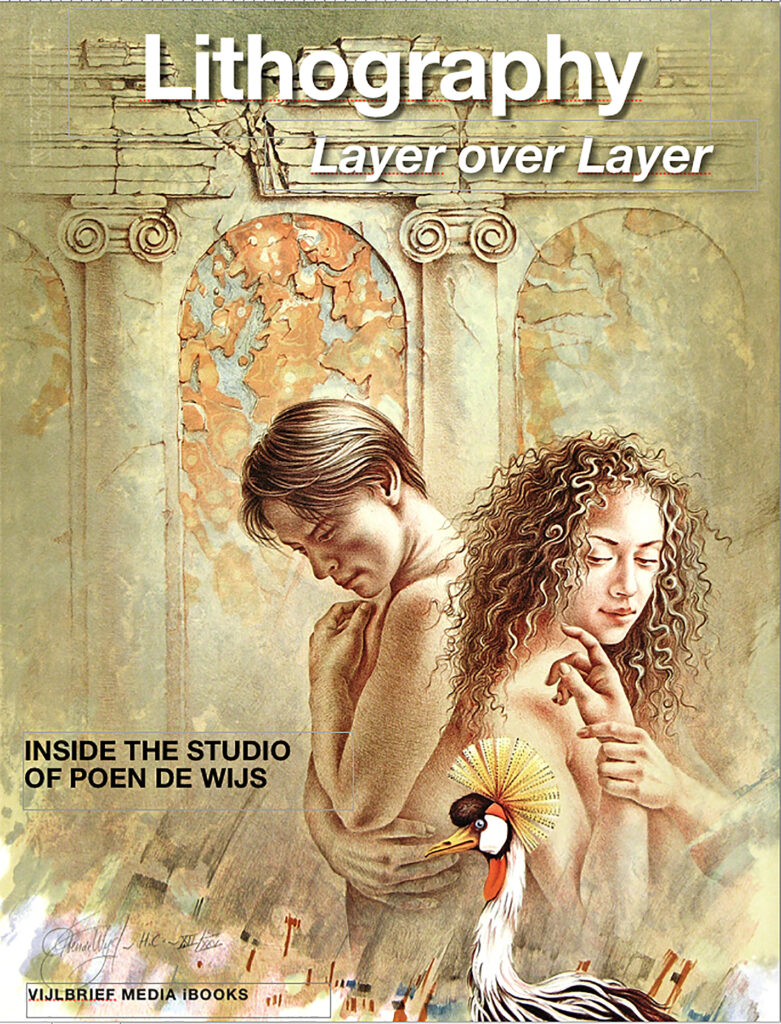
Masterclass Lithografie
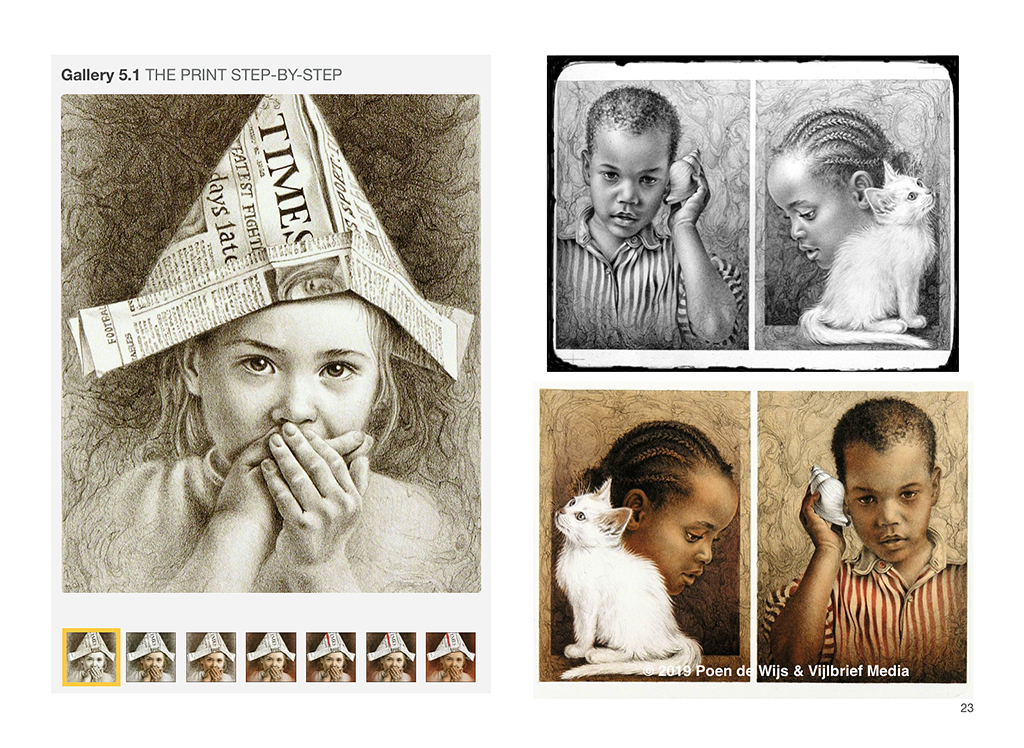
op video(clips) en met met digital studieboek.
Modern Realisme
Poen de Wijs behoort tot een van de beroemde Nederlandse kunstschilders van het Modern Realisme van de 20e eeuw.
De ontdekking van de lithografie
In 1798 ontdekte Alois Senefelder toevallig dat er, na enkele chemische bewerkingen, prachtige afdrukken konden worden gemaakt van een tekeningen met waskrijt op calciet natuurlijke kalksteen. Het principe, het afstoten van olie en water, was eenvoudig, maar de technische uitvoering was zeer gecompliceerd. Zo gecompliceerd dat deze druktechniek zich snel ontwikkelde tot een gespecialiseerde beroepsgroep en later zelfs tot een industrieel proces.
Groot vakmanschap
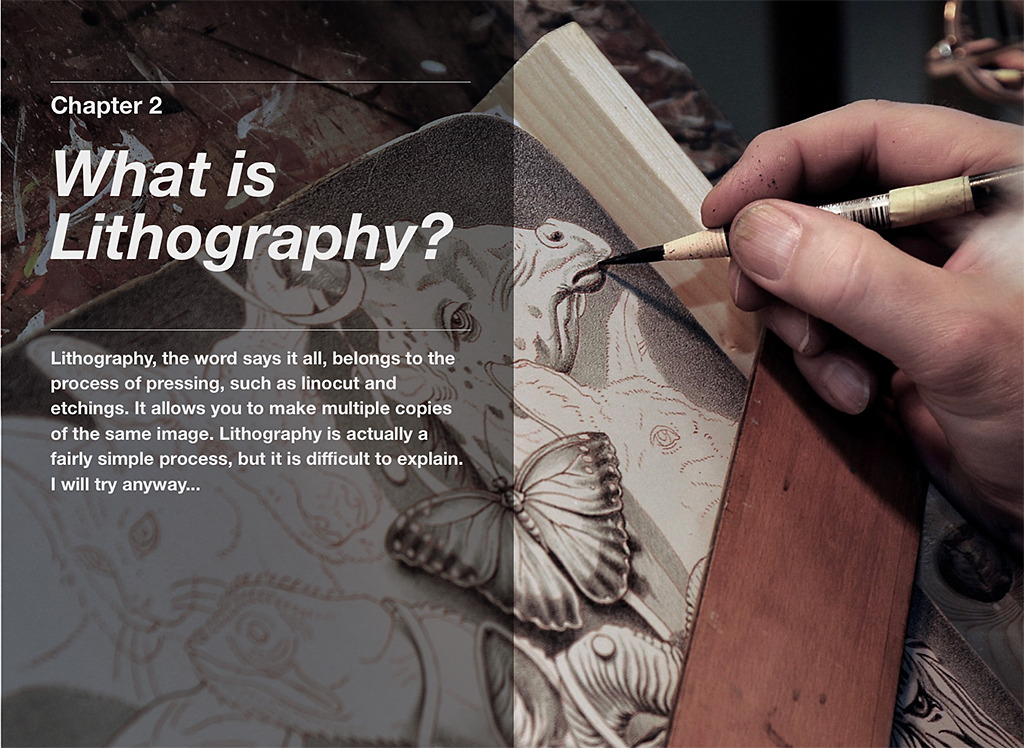
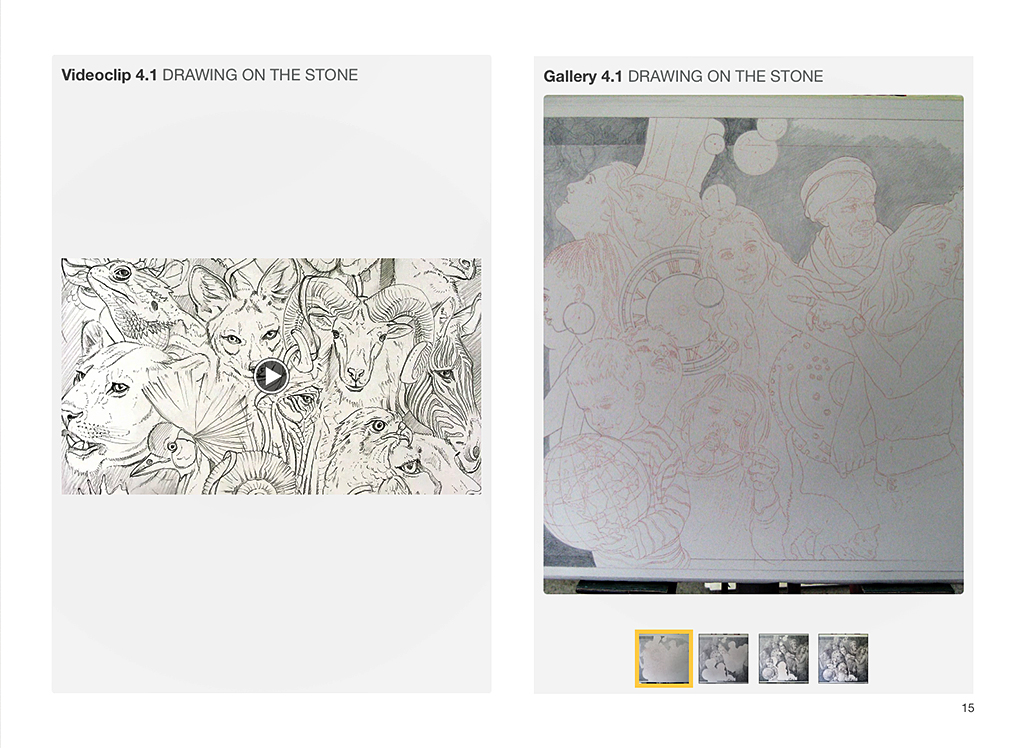
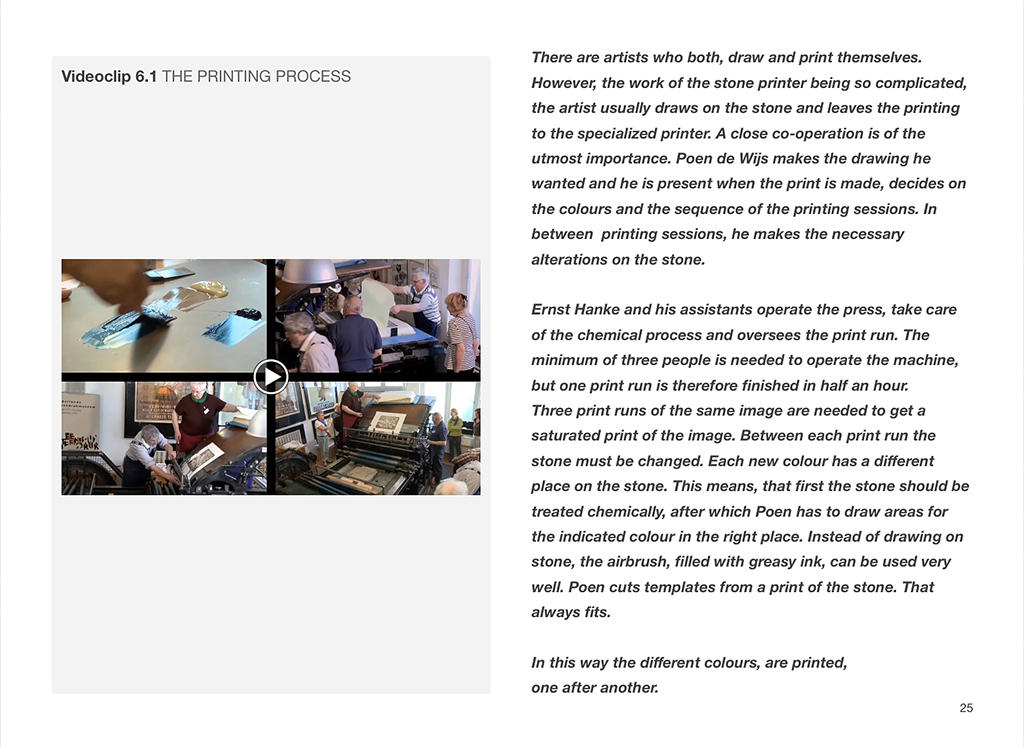
Lithografie is een van de mooiste druktechnieken waarin handwerk én vakmanschap een uiterst belangrijke rol spelen. De tekening op de lithografische steen worden gemaakt met vette materialen zoals krijt of lithografische inkt. Wanneer er afdrukken worden gemaakt, wordt de natte steen uitgerold in vette drukinkt; alleen de delen die met vet materiaal zijn getekend, absorberen de vette drukinkt en worden op papier gedrukt. Om ervoor te zorgen dat deze procedure succesvol is, moet de steen worden geschuurd tot een vlakke oppervlak.
Omvang 72 pagina’s.
Masterclass Lithography
on video(clips) and with digital studybook.
Modern Realism
Poen de Wijs is one of the famous Dutch painters of Modern Realism of the 20th Century.
The discovery of lithography
In 1798 it was Alois Senefelder, who actually discovered by chance, that after some chemical operations beautiful prints could be made from a wax crayon drawing on calcareous natural limestone. The principle, the repelling of oil and water, was simple, but the technical execution was very complicated. So complicated that this printing quickly developed into a specialized profession and later even into an industrial process.
Great craftmanship
Lithography is one of the most beautiful techniques in which handwork and craftsmanship play a prime role. Drawings on a stone are made with greasy material such as crayon or ink. When prints are made, the wet stone is rolled in greasy printer’s ink; only the parts which have been drawn with greasy material absorb the greasy printer’s ink and are printed onto the paper. In order for this procedure to succeed, the stone has to be ground into a flat surface…
English version
This Masterclass (the digital study book and the video clips) is in the English version.
Volume 72 pages.